Peripheral arterial disease
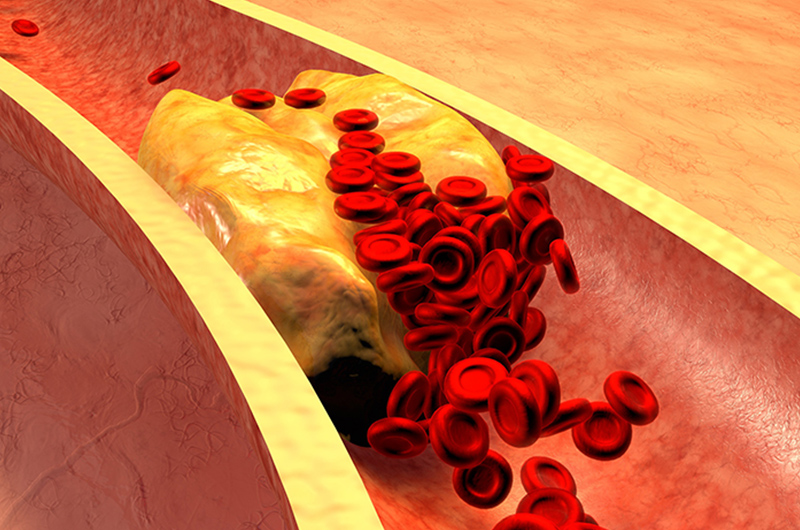
Peripheral arterial disease is a common circulatory problem in which clots or fatty plaques lead to narrowing of blood vessels (arteries to be precise) reducing blood flow to your limbs. This leads to lower blood flow to the extremities (most likely legs). This leads to pain in the lower limbs when walking and relieved by rest (called as claudication). It can worsen to an extent to cause continuous pain at rest also.
In old age, it is an indicator of a more widespread accumulation of fatty deposits in arteries (atherosclerosis). This condition is usually not limited to the extremities and involves multiple blood vessels including those supplying the heart and brain. In diabetics or those who smoke, this might present at an earlier age.
Symptoms
The most common symptoms that patients with PAD present with is leg pain when walking described earlier (claudication). Claudication symptoms include cramping or muscle pain in your legs or arms that's triggered by activity, such as walking, but disappears after a few minutes of rest. The location of the pain depends on the location of the clogged or narrowed artery. The severity of claudication varies widely, from mild discomfort to debilitating pain. Severe claudication can make it hard for you to walk or do other types of physical activity. If peripheral artery disease progresses, pain may even occur when you're at rest or when you're lying down (ischemic rest pain). It may be intense enough to disrupt sleep. Hanging your legs over the edge of your bed or walking around your room may temporarily relieve the pain.
Besides pain, it can manifest symptomatically in many forms like leg numbness, coldness in your lower leg or foot, sores/ulcers on your toes or feet that won't heal and darkening of skin or black pigmentation in your legs. Therefore, if you have leg pain, numbness or other symptoms, don't dismiss them as a normal part of aging. Consult an interventional radiologist and make an appointment.
Risk Factors
- Smoking
- Diabetes
- Obesity (a body mass index over 30)
- High cholesterol
- High blood pressure
- Increasing age, especially after reaching 50 years of age
- High levels of homocysteine, a protein component that helps build and maintain tissue
- A family history of peripheral artery disease, heart disease or stroke
- People who smoke or have diabetes have the greatest risk of developing peripheral artery disease due to reduced blood flow.
If peripheral arterial disease is suspected, the treating doctor might confirm the diagnosis by physical examination, ultrasound Doppler, CT angiography and few blood tests (cholesterol and glycemic control).
Treatment for peripheral artery disease has two major goals
- Manage symptoms, such as leg pain, so that you can resume physical activities. This is not intended by symptomatic treatment like pain killers. Rather it is dealt by dealing with the pathology at the root like angioplasty of the narrowed blood vessels or surgery.
- Stop the progression of atherosclerosis throughout your body to reduce your risk of heart attack and stroke
Role of Radiologist
- Angioplasty: In this procedure, a small hollow tube (catheter) is threaded through a blood vessel to the affected artery. There, a small balloon on the tip of the catheter is inflated to reopen the artery and flatten the blockage into the artery wall, while at the same time stretching the artery open to increase blood flow.Your doctor may also insert a mesh framework called a stent in the artery to help keep it open. This is the same procedure doctors use to open heart arteries.
- Bypass surgery: Your doctor may create a graft bypass using a vessel from another part of your body or a blood vessel made of synthetic (man-made) fabric. This technique allows blood to flow around — or bypass — the blocked or narrowed artery.
- Thrombolytic therapy: If you have a blood clot blocking an artery, your doctor may inject a clot-dissolving drug into your artery at the point of the clot to break it up.